Carney's China Visit Whips Up Anticommunist Flack
Carney's meeting with President Xi Jinping reveals core news media function
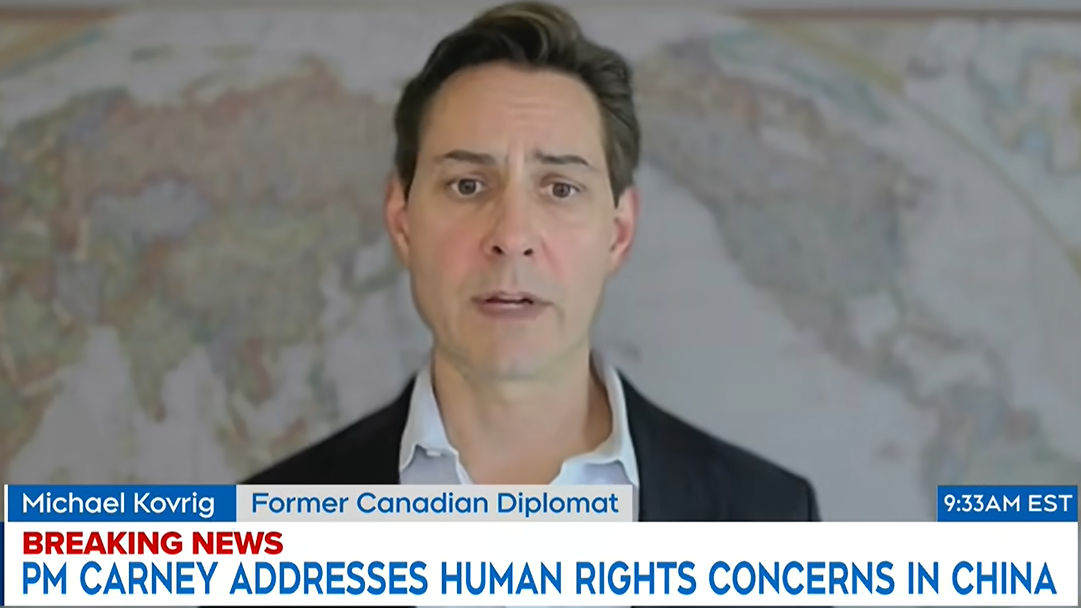
Michael Kovrig, a former Canadian diplomat, is more famously known as being one of the "two Michaels" who were detained by China. Their near three-year detention was tied into Canada's arrest of Huawei chief financial officer Meng Wanzhou in Vancouver. Meng was arrested and detained in Vancouver in 2018 at the request of the US, despite not being charged with any crime in Canada. Michael Kovrig and Michael Spavor were detained almost a week later under charges of "engaging in activities that threatened China’s national security." The "Michaels" were released in 2021 after Canada dropped extradition of Meng.
Two years later, as reported by The Globe and Mail, Spavor alleged that information he passed onto Kovrig was then shared with the Canadian government and the Five Eyes, a coalition of governments that share intelligence gathered by their spy agencies and that this led directly to his imprisonment. He was looking for financial compensation. The government, and Kovrig, denied these claims. In 2024, the federal government reached an estimated $7 million settlement with Spavor in order to avoid a lawsuit.
Kovrig, who was charged with espionage in China, remains an key source to news outlets looking to report on Canadian-Chinese ties. Since Prime Minister Mark Carney announced a trade deal with China, Kovrig has maintained a near omnipotent presence over news coverage on the subject. He appeared on CTV News and CBC News as an expert.
In a CBC News article unironically titled "Carney secures another China trade deal — but at what cost?" John Paul Tasker pulls from the on-air interview with Kovrig as an important voice. After noting China's seemingly arbitrary use of tariffs against Canada, Kovrig quite literally says "You have to put Washington first. I know that's not a popular idea in Canada right now." That interview with Kovrig is instructive, as he also directly says that Canada should follow the same policies towards China that the USA does.
Of course, Kovrig mentions "communism" early on and urges tougher positions on China regarding Carney's approach. Yet every criticism lobbed against China, that its trade is asymmetric, they benefit more than Canada does with their vehicles sold here, that Beijing only lowers tariffs when Canada does, applies equally to the US. "What we have is a trade deal with limits," he said not of the US. "With a government that doesn't play by the rules." Unsurprisingly, when Kovrig mentions the instance of an assault outside of a Chinese embassy in Toronto signifying how this mirrors China's crackdown on dissent, there is absolutely no pushback. How one instance of a Chinese national individually carrying out an assault reflects the government of a country containing more than a billion people is unclear.
What does the host do to conclude the interview? Instead of questioning Kovrig's bias and history, she reiterates the current moment between Canada and China only to inquire "How does that make you feel?"
Enjoy this article? Sign up for weekly analysis of Canadian news!
A clear parallel with Carney's visit to China is his visit earlier this year to India, with the aim of forging stronger ties with the Hindutva Prime Minister Narendra Modi. Carney made that trip after concrete government reports established Indian culpability in attacks on Sikh activists in Canada. None of this is mentioned by Kovrig. Considering the parallels between how Canada deems the governments of each to be a threat to national security, this is an odd omission.
But the status of China as communist is highlighted specifically to draw up criticism of Carney and pull him further to the right. As exemplified by the prime minister's domestic and foreign policy, he is an arch-capitalist. looking to expand the global market for Canadian goods and funnel most of the profits to Canada's private sector. In global economic terms, China is a necessary partner. But the criticism lobbied against this relationship are sectioned away from criticisms that apply equally to other partners. China continues to be painted as a unique threat, unlike any other country in the world.
 Scott Martin

Human rights violations, the top concern touted by these reports, are very real. However, their lack of application to other countries is obvious. Carney has deepened Canadian ties with the UAE, as our weapons have been found in Sudan; used by the RSF, a paramilitary group that's conducted countless atrocities. When Carney visited Saudi Arabia to deepen ties, CBC News described it as a nebulous "political risk." In the years prior to the visit, Canada supplied the autocratic government with armoured vehicles. Most damning, Canada continues to supply arms to Israel while it commits a genocide. Is Canada directly fueling human rights abuses in China? Where are the concerns for human rights in regards to Israel? Kovrig explicitly says Canada should align with Washington, despite the catastrophic treatment of human rights in that country.
Coverage like this exemplifies the attitude that Canadian legacy news outlets have towards communist governments. When they aren't deploying white supremacist talking points or ignoring imperialist threats against these nations, they urge our fully neoliberal ideologue head of government in adopting hawkish positions, disproportionate to other, more troubling international relationships. All of this is par-for-the-course for capitalist media. However, the inclusion of Kovrig, someone with more than enough to suggest he was a dishonest actor, shows the deep entrenchment of this total bias.