
Carney Knows Privatization Worsens Conditions, That's the Point

It has been over 50 years since the birth of neoliberalism, the political and economic outlook that shifts the role of government into facilitating the growth of the private market. Since its bloody implementation in Chile under the fascist Augusto Pinochet dictatorship, the ideology has dominated the world. It soon was birthed into the mainstream by politicians like the US' Ronald Reagan, Margaret Thatcher in the UK, Bob Hawke in Australia and the one-two punch of Brian Mulroney and Jean Chrétien in Canada.
In that time, labour movements were crushed, wages have stagnated and corporate profits have ballooned out of control. In Canada, the hollowing out of public services began under Progressive Conservative Prime Minister Brian Mulroney, but was sealed with Liberal Prime Minister Jean Chrétien and Finance Minister Paul Martin's 1995 budget. As researcher Katherine Scott writes, despite a near evangelical belief that neoliberal policies like cutting government spending and reducing taxes is the key to growth, "the weight of evidence over the last four decades shows that this simply is not the case, especially in times of economic uncertainty and heightened financial stress. "
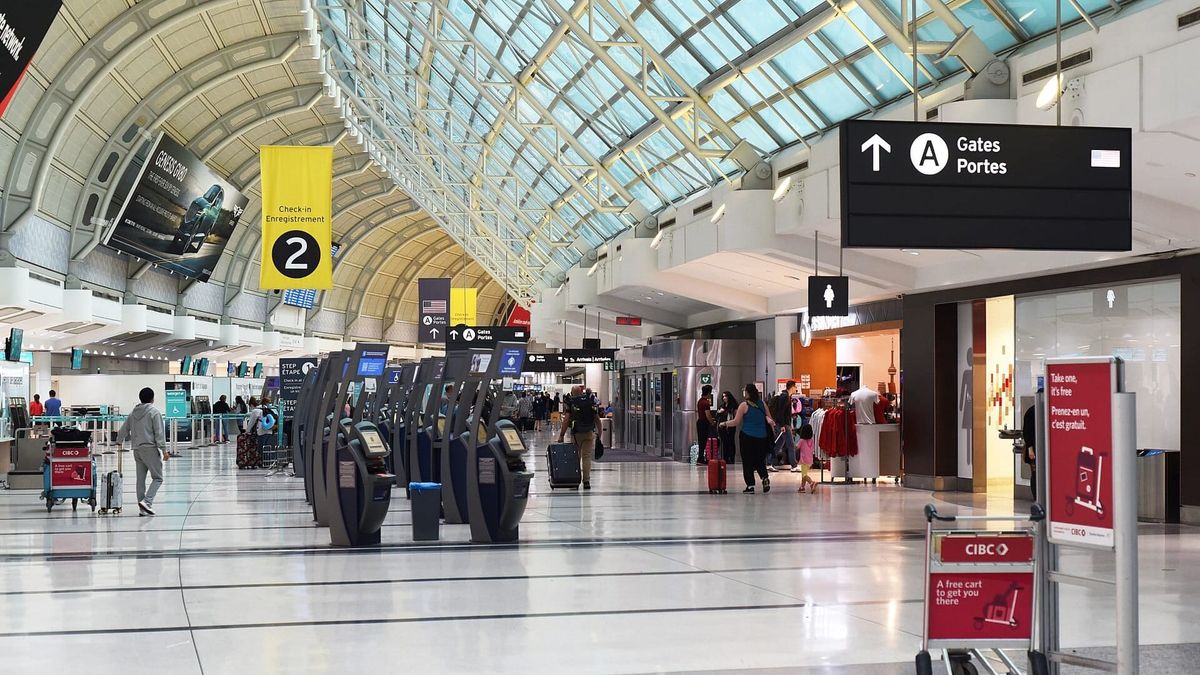
Look to the privatization of Canada's public airline, Air Canada, as an example. In 1989, the final shares were released from the government after a partial sale the year prior. In an iPolitics article from 2013, the costs were clear. A $6 billion loss in 25 years. Additional, unaccountable charges to passengers. Cut routes. Back-to-work legislation for striking workers. In short: a disaster.
Now, as Prime Minister Mark Carney's Liberal government considers privatizing airports, this pattern is poised to repeat itself. Don't expect these arguments to sway the government's decision– They're a fundamental part of the appeal.
News coverage of this issue has been mixed. One by Darren Major in CBC News cites multiple experts. The negatives? A loss of lease fees means approximately $525 million in lost income, privatizing the infrastructure repairs, which passes the costs directly to customers, functional monopolies in air travel, higher costs (as in the Australian example). But one expert cites the private investment as a positive, considering "returns." But the article ultimately ends with a wet fart. One expert referring to the higher costs in the Australian model said "I can't give a view on whether you should or shouldn't privatize in Canada, but do it with your eyes open."
Meanwhile, in The Globe and Mail, columnist Tony Keller paradoxically suggests that privatizing Canadian airports would mean more public transit funding. "Tens of billions of dollars from airport privatization? Tens of billions of dollars into transit infrastructure." The fact that the government could simply pour a shred of its new military budget into public transportation is, apparently, not conceptually possible for such a business-minded person.
Perhaps most surprisingly, in a CTV News column, former Stephen Harper cabinet minister James Moore came out against the idea, but still prefered public-private-partnerships. "Full privatization of our airports," Moore concludes. "Would clearly be the wrong direction for the government to take."
 Scott Martin
In the variety of opinions on this proposal, the conclusion is left on the cutting room floor. Privatizing airports would bring more revenue, profits and control to corporations. Service would get worse, more expensive and more difficult. However, to a neoliberal opportunist such as Carney, these are not in contention.
The returns mentioned by McGill University lecturer John Gradek in the CBC News piece are revealing when looked at from a different angle. Gradek suggests the government should "get somebody else to finance" infrastructure work and incentivize private investors to pour money into the deal for a return. For Carney, this is a win-win. In the one case, fostering investment and returns for private entities translates to a "good economy" for those who dogmatically push neoliberalism. Another important benefit is that the criticism of these services is then shifted away from the federal government. If a private entity mismanages the airports or charges outrageous prices, well then... is the government to blame?
As we can see in the examples provided at the beginning of this piece, the effect of privatization across the world and the neoliberal economic outlook is obvious: these policies are bad for the general public. But it's a mistake to assume that these are arguments against privatization. It's a method to increase private revenue and reduce the role of government to merely facilitate the growth of markets. Worse service and higher costs are what allow this to happen. As the old adage goes, it is a feature, not a bug. After all, when you can afford first-class and private air travel, why would you even notice the negatives?