Winter in Cuba's Heartland
Reflections on an impactful trip among escalating attacks.
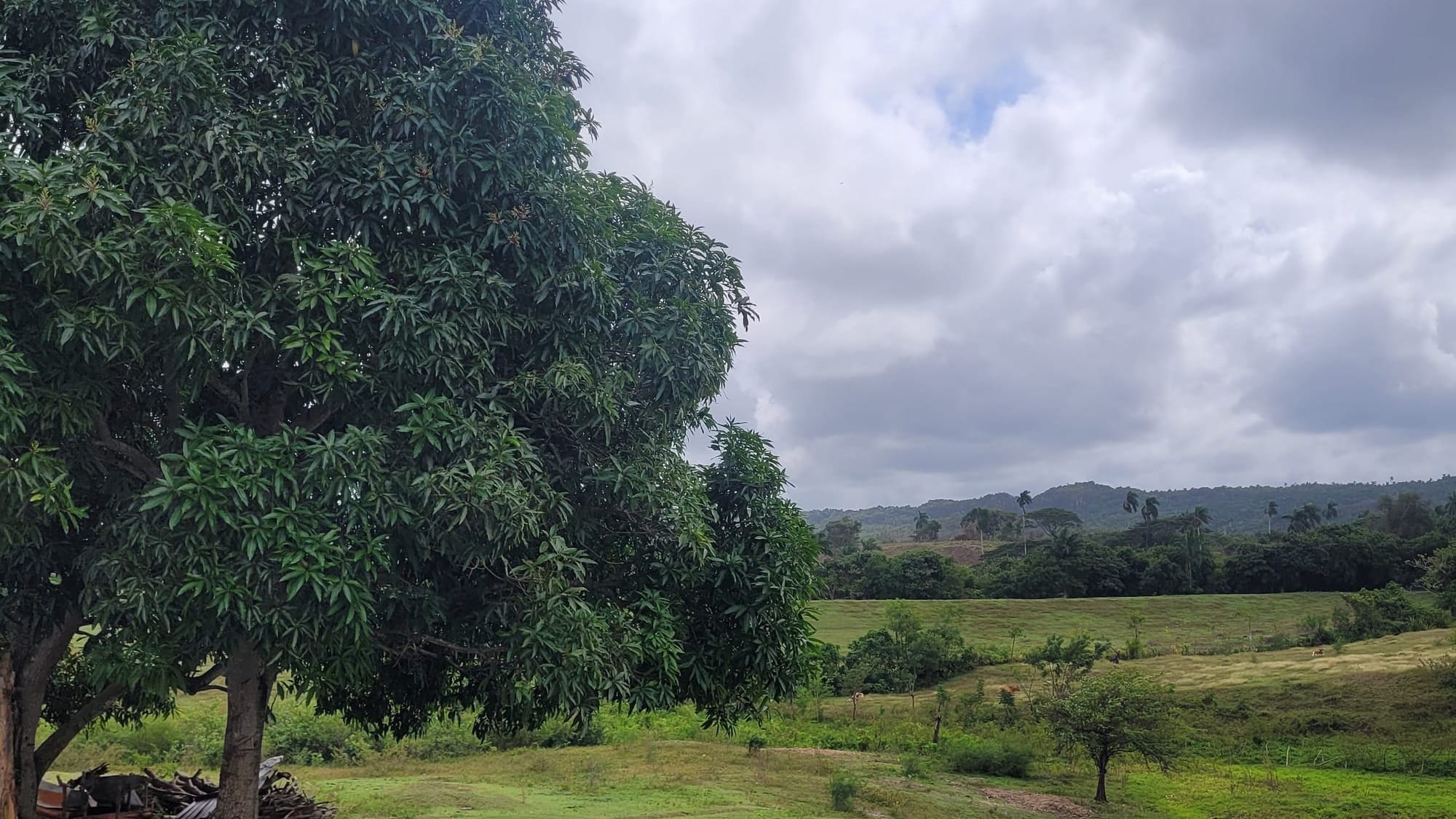
A word turns in my head... gently bumping against the edges of my mind. It's rarely used, yet strangely memorable: solastalgia, the feeling of homesickness while at home. I had felt something opposite before I ever learned the term. Feeling at home in a strange land. I was in a country I had never been, near a farm I had never seen. Sun glimpsed over the hills between lazily rolling clouds. Trees dotted the dirt road leading up to the house. Yes... this feeling was unique. Standing there, absorbing the warmth, I felt as though I had known the land all my life.
Shortly before my trip, I met a friend for a lovely dinner. They suggested going out, but I had had my fill. So, an alternative proposal: If I would bring the wine, they would make the meal. It was agreed. We caught up over some excellent salmon and a bottle of red.
Our night turned to politics, as it often does when mutual respect emanates among friends. As long as they’ve known me, I’ve been very open about my beliefs. So they posed a question: “What does your perfect system look like?” Over the years, the hypothetical had become a topic so regularly explored that I had my answer memorized. There was no perfect system, of course. But there's real-world examples. Benefits, flaws, challenges, triumphs. It was an oversimplified answer, but I responded with one country: Cuba. The name reverberated in the air and a look of doubt washed over their face. Wine swirled in my glass as they posed a question…. “Have you been to Cuba?”
Customs was a slog, even more than usual. Tucked inside the booth ahead of us was an agent of little inexperience. That soothed me. But whoever was in line was inexperienced, too. That didn't. Tourists fumbled through explanations of improper paperwork or missing credentials. Our winding line of visitors aimlessly followed whatever way felt best in the moment, branching one stream into two thoughtless flows. An old couple in front of us turned and complained of poor service. Two young men behind us loudly voiced their frustrations to no one in particular. I stood there, in my mask, sweating, aching and agitated. My energy focused on maintaining composure. Every entitled complaint was a stabbing pain in my eardrums.
On the bus to the resort, an older white man, pulling along his begrudging wife, took the role of spokesperson for our country. Our tour guide pointed out the natural gas fields, crucial to the country's energy supply, precarious in the best of times. Cuba, he explained, was in a terrible shape. COVID had hit them hard. Tourism was down, so they were building more hotels along the beach. Shame hit me like a spinal tap. As the guilt and complicity flushed through my bones, rising up through my muscles and skin, our spokesperson spoke up with a question that was sure to entertain, "Is Fidel Castro really Justin Trudeau's father?"
My first experience in my ideal system was, admittedly, my own little slice of Hell.
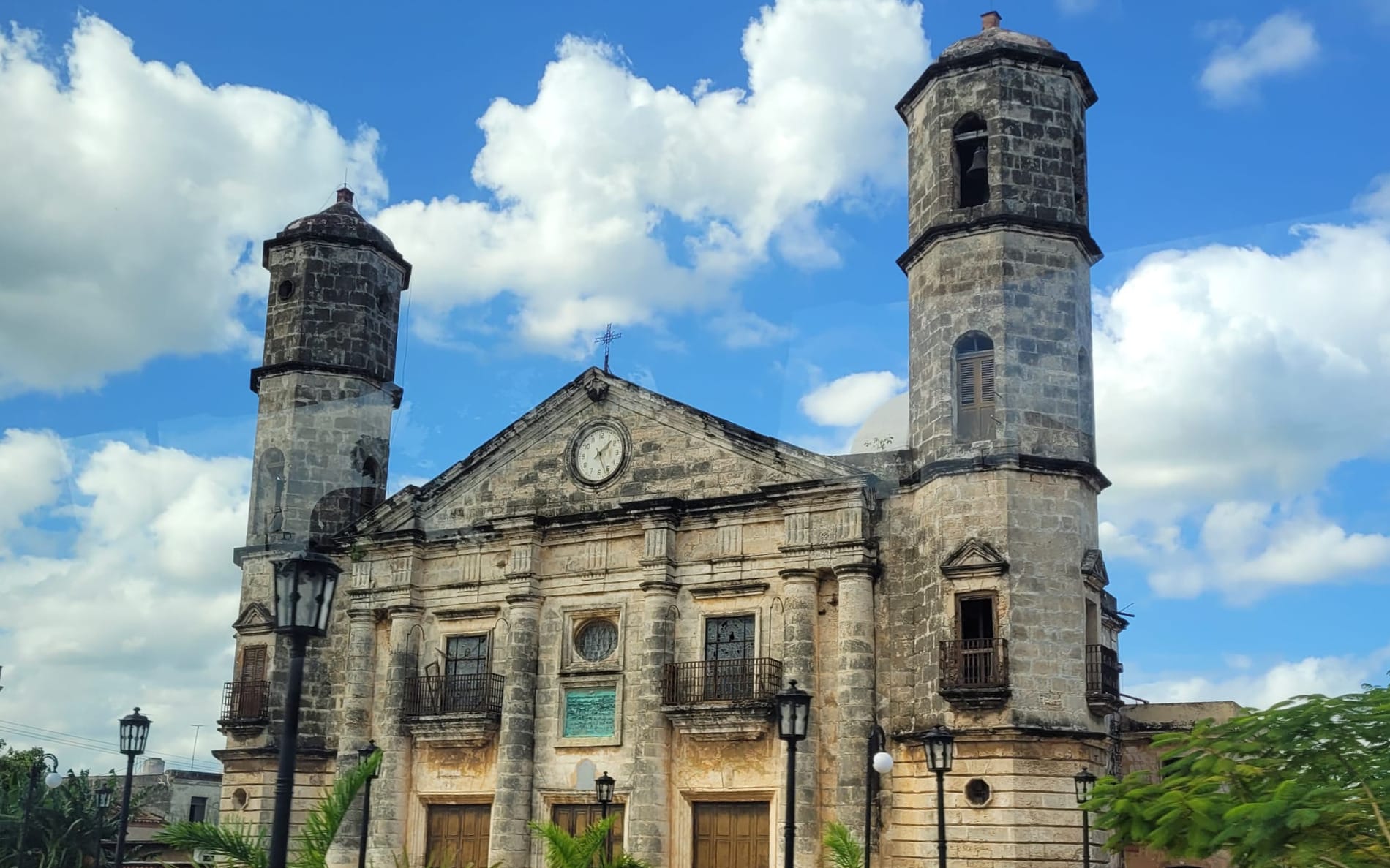
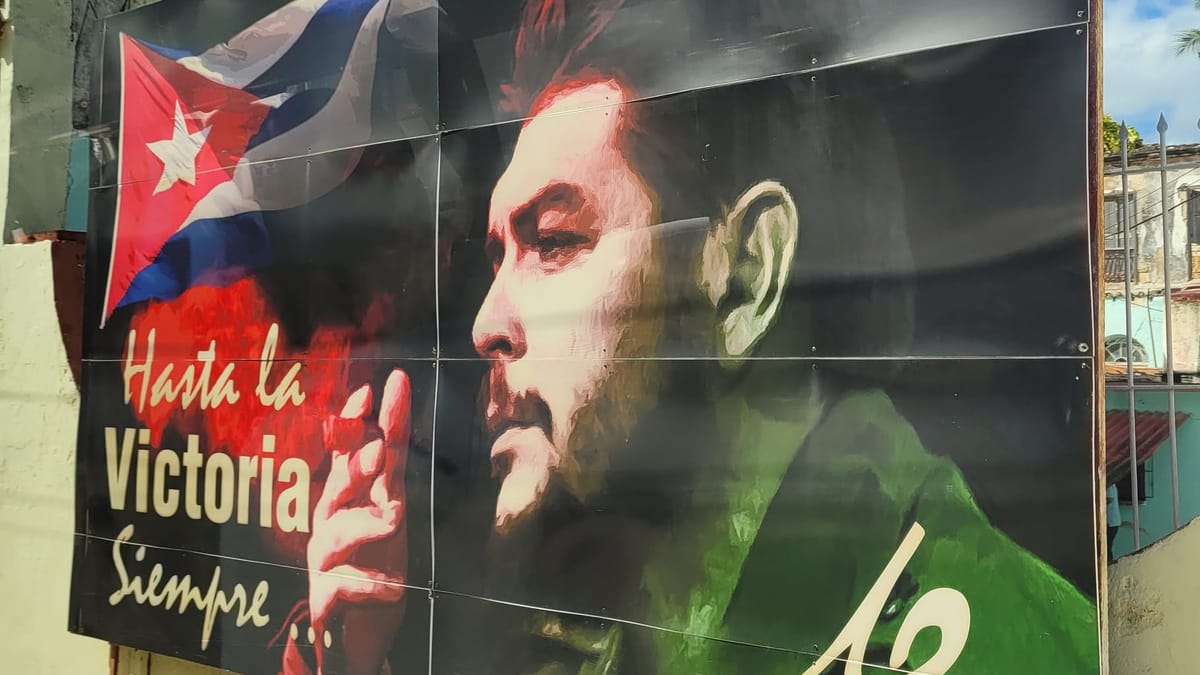
Graffiti and billboards swept by the windows on the bus. Advertisements, a typical sight up north, were almost completely absent here. In their place were iconic images of Che Guevara, Camilo Cienfuegos and, of course, Fidel Castro. Far more numerous in between the sloganeering, however, were the apartment complexes. Throughout our hours of driving, newer, more updated buildings were just as likely as old shacks. “La revolucion es construir,” one billboard read. In English, "The revolution is to build."
It was just over halfway through our vacation. We had ventured off our resort to ride what the tour guide called a “Jeep safari.” Ormani gave us the business on excursions at our first morning's orientation. Driving a jeep through Matanzas to lunch on a farm, punctuated with swimming in a cave, it sounded lovely... everything did. We asked about the option for an overnight trip to Havana. We had seen it in the brochure, but he hadn’t mentioned it. He was shocked. “You’re the first Canadians to ask about an overnight trip to Havana,” he balked, after writing down some details. We booked nearly all the tours he mentioned. We were the first Canadians to book four excursions, he told us. He had worked in the industry for sixteen years.
Our bus ground to a halt. I roused up my partner from their dozing. The morning had been rough for them: an early wake-up call and a newly cultivated headache. In spite of this, they powered through it all to commit to our road trip. Our driver for the day would be one half of an older couple from Surrey, British Columbia. We had the option to take the car ourselves, but neither of us knew how to drive manual. We were lucky. Their presence gently cooed “loving parents.” But no matter their warm demeanour, nothing could paper over my shame of not knowing how to drive stick.
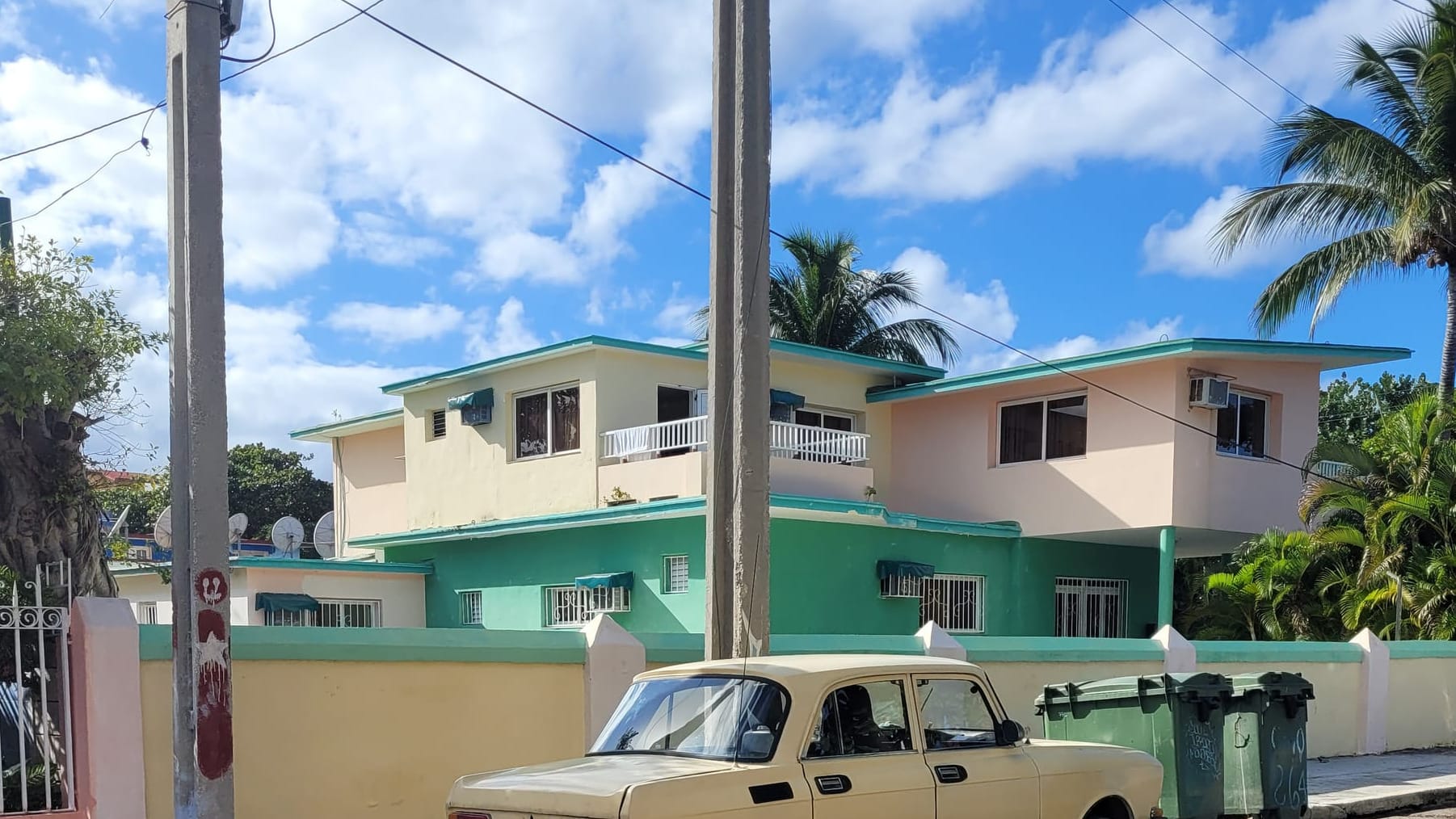
Working men joked with each other on the street. Elderly couples gazed out into the morning sky together. An old man without legs roamed the street in a state-of-the-art electric wheelchair. Cows grazed in open fields. People lined up for services in towns. Children begged.
No, that’s not quite it. Begging carries baggage. An unhoused man desperately grips a cup in front of him. A tenant pleads with their landlord not to pursue an eviction. Frantically looking for answers as you fight off existential devastation from a job rejection.
Not to say these kids weren’t in dire need, but begging isn’t quite the word for it.
It’s trite to say our road tour was coloured by what we saw, but what was equally important was what we didn’t see. Yes, we saw rural children waving at tourists in vehicles masquerading as Jeeps, hoping for treats. Yes, we saw farmers working their fields for far less than one would earn in Canada, thankful the overcast day dulled the sun’s heat. Yes, we saw outdated and unpainted buildings. And, of course, we saw expectant tip jars leaned towards the rich tourists. We also saw hospitals, schools, inspirational messages of hope, a lust for life. A dog looking both ways before crossing the street. Smiles from onlookers at his polite behaviour. Love for community.
What we didn't see was perhaps even more telling. We didn’t see people roaming the street without homes. No encampments in local parks. Scores of policemen terrifying citizens were absent from our view. Multinational corporations hadn't visibly dug their extractive claws into the culture.
We saw poverty, of course. But far important was that we saw life. Battered, exhausted and frustrated... but dignified.
It’s a commonly held belief that countries like Cuba should be pitied. Much has been written on complexities of capitalism, imperialism, settler-colonialism and the historical legacy of the Cold War to explain this attitude. As someone who has read much of this work, this knowledge is made much more impactful when witnessed first-hand. Children outstretched their hands at the convoy of vehicles as they hoped for treats, toiletries and cash from rich Canadian tourists. Money meant nothing to us, they assumed. It’s not that they didn’t need it: they certainly do. Yet, little attention is given to the economic warfare that Cuba experiences that materially prevents it.
In Canada, it’s supposed to be better. Skyscrapers stand as testaments to the achievements of our country. Trillions of dollars line city foundations. Millions in extravagant homes. Billions in the industry raising their prices. A starscape of towering buildings, all competing against each other to prove that we can achieve anything. Much less attention is paid to those shivering at the base of these monuments. Human beings lining the parks in a frigid daze, praying the police choose to avoid them for one more night. Passerbys avert their gaze in the streets. Complaints from their neighbours regularly lead to them being shipped around instead of supported.
In Cuba, some buildings are crumbling. They’re worn-down, rusted and small. The difference is, each one of them houses someone, or provides a service to them. At least the children who hoped for excitement from this caravan of manual vehicles have a place to rest their head.
Which of the needy occupies your mind? The growing, shivering souls in the doorways of restaurants down the street from you? Or the wanting brown children who sleep in a bed, thousands of kilometres away?
Needless to say, my 2023 trip to Cuba left me equal parts invigorated and discouraged.
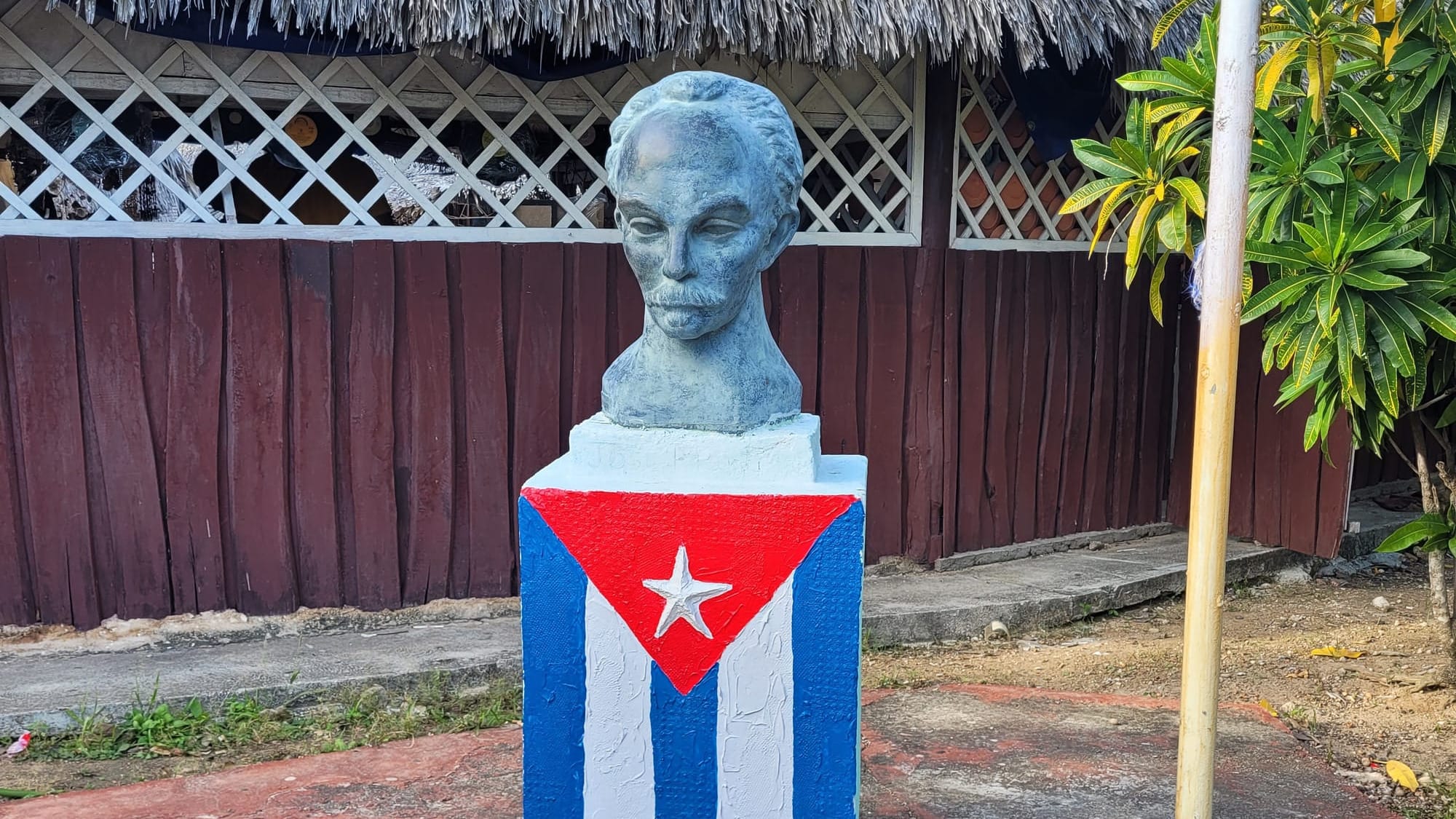
The US has since escalated its warfare against Cuba. It's clear that the Trump administration, more specifically US Secretary of State Marco Rubio, will stop at nothing until they overthrow Cuba's revolutionary government. Venezuela, a key trading partner for oil, was targeted by the US in part to cut off energy to the country. The US has since implemented an oil blockade to strangle the people. Air Canada has suspended flights due to fuel shortages. Russia is evacuating tourists then suspending flights. After 60 years of defying US imperialism, Cuba is under its greatest test yet.
Meanwhile, Canada does nothing. There have been crickets from Prime Minister Mark Carney and Global Affairs Canada about this onslaught. The relationship between Canada and Cuba is deep and rich, yet despite his Davos speech, Carney refuses to stand up for the besieged island. Rhetoric about middle powers paving their own path omit the price imposed on Third World nations.
As I have linked, there are persuasive arguments to be made, backed with historical analysis and evidence, that Canada should support Cuba. These are important, but sometimes, we need to look beyond the numbers and facts. These are real people. Cuba is one of the few countries to throw off the chains of colonialism, stave off imperialism and continue to provide for its citizens. Ignoring the tightened grip of the US is concession to the dominant world order: one that Cuba's people have been resistant to for over sixty years. But we don't have to ignore it.
Remember the people. Remember their dignity. Remember our role.