Public Cuts Funded NATO Target, News Praised It Anyway
Widespread reporting on NATO spending but not of federal reductions

Two stories about federal spending under Carney gathered headlines this week, with one disproportionately stealing focus. The first, reported by Global News, delved into cuts and reductions that will affect the public sector, tabled in the House of Commons on March 20. Of their findings, most of the departments facing some sort of cuts range hit double-digit per centage. For example, the Canada Revenue Agency will lose $4,349,385,598 or 40.9 per cent of their budget, while Via Rail Canada Inc. will lose $1,162,533,800, or 50.2 per cent. Perhaps most dramatic is the Canada Post Corporation, which faces a 98.9 per cent reduction of its government funding. Canada Post will now, functionally, be made to sustain itself purely on self-generated profit.
Simply put, these cuts are devastating. Almost $31 billion in funding that was used to fund public services necessary for a functioning society will be eroded. Agencies that face an increase in funding include the Department of National Defence, the Communications Security Establishment and the Canadian Northern Economic Development Agency, among others.
It should be made known that this reduction in spending is not a uniform withdrawal of funds. Some programs that were set to renew are simply being allowed to expire. Others, like Global Affairs Canada, plan to do this as well as reducing their work force by almost 900 people. As David Akin reported "Almost all agencies and departments that have had their budgets cut plan to reduce their employee headcount and be more efficient with their reduced funding." While Carney has repeatedly touted AI as a mean to this end, it's likely this will lead to even bigger problems. It was recently reported that at least one person applying for immigration to Canada was rejected because of false job duties made up by the Immigration Department's AI review program.
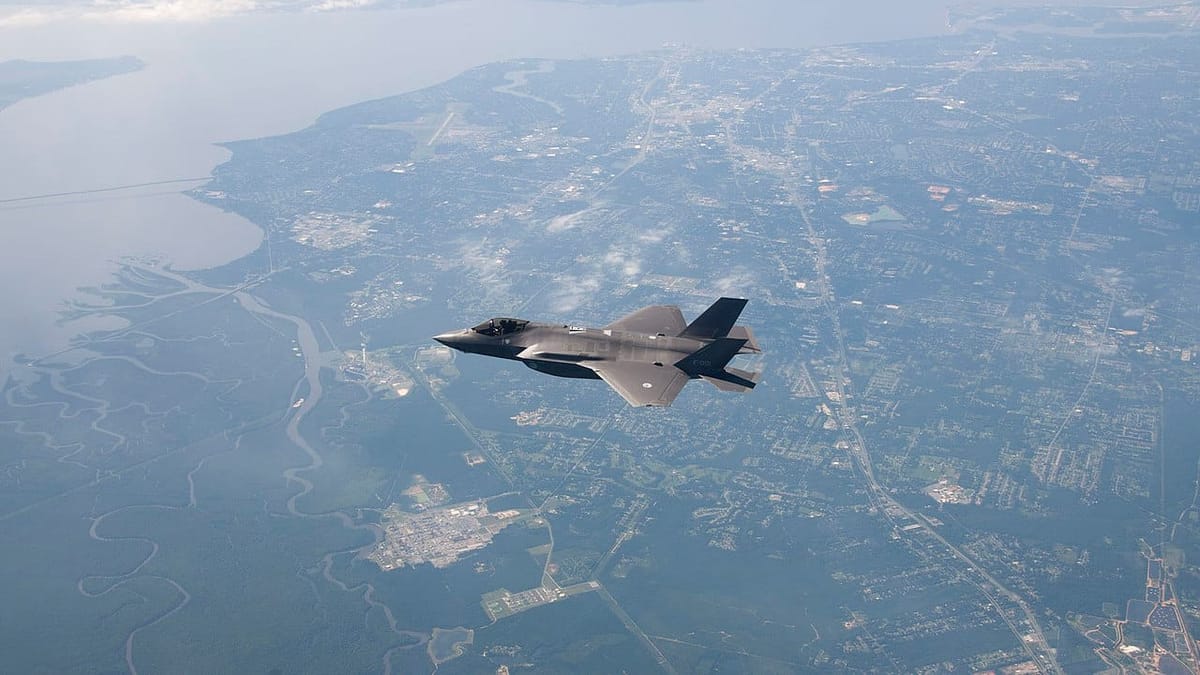
Meanwhile, the second story was Canada reaching the two per cent GDP spending on defence required by NATO, a talking point Carney has repeatedly boasted. Guess which story received more effusive praise in news media.
In what one Canadian Press headline reported as a "victory lap" for Carney, the Canadian government's massive injection of military funding would not be possible without the reduction in public services. Indeed, news media coverage of the two per cent target reads as impatient celebration. Judy Trinh's article at CTV News begins by describing the previous years as "a decade of plodding progress."
Trinh's article actually ends on a voice calling upon more investment and warmongering coming from Conservative defence critic James Bezan. "We shouldn't have been dragging our feet," he concludes.
The headline for the CBC News article tells us Canada's commitment was met "after years of lagging and a last-minute lift." Murray Brewster quotes Defence Minister David McGuinty who proudly declares "We were disciplined. We were strategic. We were focused." The article also quotes Bezan, who stressed that this injection of funding did not translate to increased military capabilities. Global News, which published the story delving into the massive cuts throughout multiple public agencies, also covered the NATO two per cent target with general praise, mirroring similar points as CBC News and CTV News.
Meanwhile, The Globe and Mail described it as "an overdue accomplishment for Canada." The National Post reported the fact, taking the side of the Conservative opposition that it simply wasn't enough.
Needless to say, no anti-war critics were consulted in any of these articles. Further, none of these articles mentioned the massive cuts which made the military injection possible.
 Scott Martin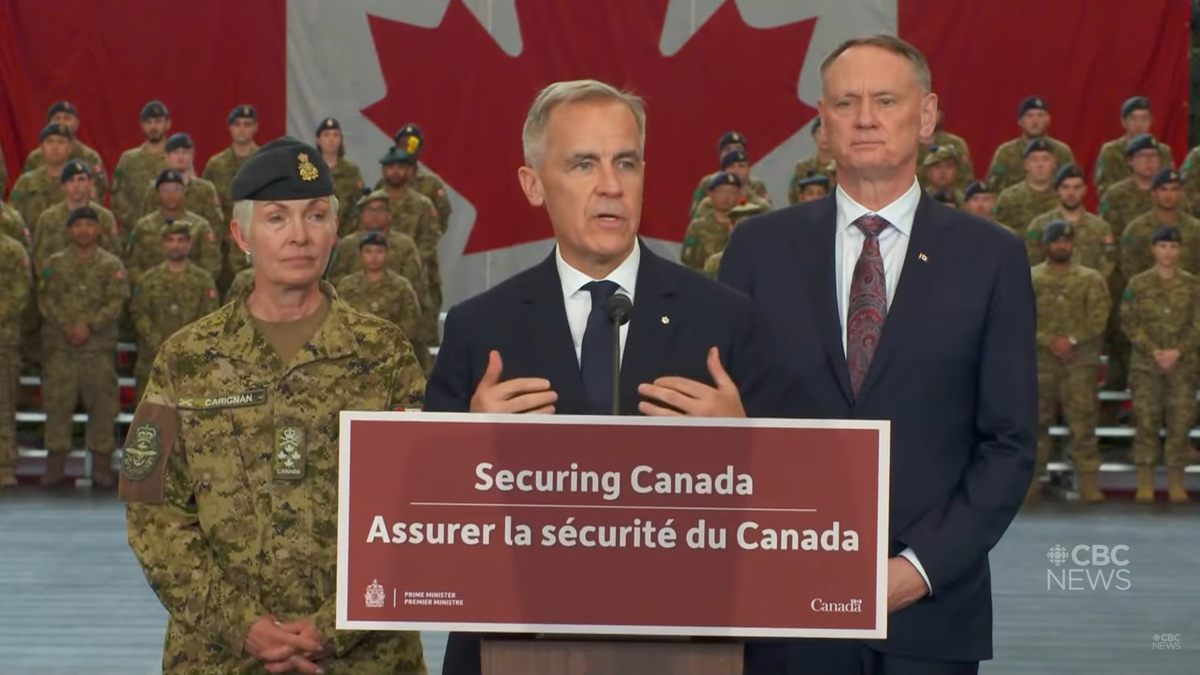
A unique aspect of this military spending praise are the comparison points used in nearly all of the pieces. Many point to the fact that Canada last met the two per cent target at the tail-end of the Cold War. In the CTV News article, Trinh specifically mentions this "since the fall of the Berlin Wall." Meanwhile, Steven Chase's Globe and Mail article compared Carney's funding increase to be the "biggest short-term cash infusion for the military since the Korean War."
Yes, Carney's strangulation of public services doesn't enter into the minds of these outlets, but even the praise comes with baggage. Comparisons to a time where the Canadian military operated in a dangerously heightened superpower rivalry should raise further questions. For example, in the Korean War, Canada directly deployed troops. With an illegal war operated by our neighbour and closest military ally, supported by our government, are we to believe our increased defence spending won't be deployed in a disastrous fashion?
As I have made the case previously, news media is more than happy to mirror the government's militarist policy. Comparing these two government budget stories displays that attitude as starkly as possible. Federal budgets are seemingly unrelated in the minds of reporters, even when its shown that the reduction in funding directly helps the military. Despite this, news organizations praise a target demanded by the US and subsequently raised even further, at Trump's behest. This cognitive dissonance is quite telling on the priority of our news media, as the ideology aligns neatly with the right-wing trajectory of Carney's government.