Politicians Can Sidestep the Press Now, Apparently
Three of the biggest political leaders leave reporters in the dust
Prime Minister Mark Carney made international headlines for his landmark speech in Davos, Switzerland. At the World Economic Forum, the prime minister explicitly admitted that the post-WWII international order was built on a lie. American hegemony, which had benefited Canada in the past, was over. A new path would be charted. News outlets across the world breathlessly published excerpts, noting its importance.
But Carney’s subsequent speech in Quebec City raised strange questions. Carney cited the Battle of the Plains of Abraham as a beginning of the partnership that would become Canada. This 1759 battle between France and Britain took place in Quebec during the Seven Year War, and resulted in a British victory over the French. Carney cited this as a moment of Canadian unity to a French-speaking audience. It didn't go well.
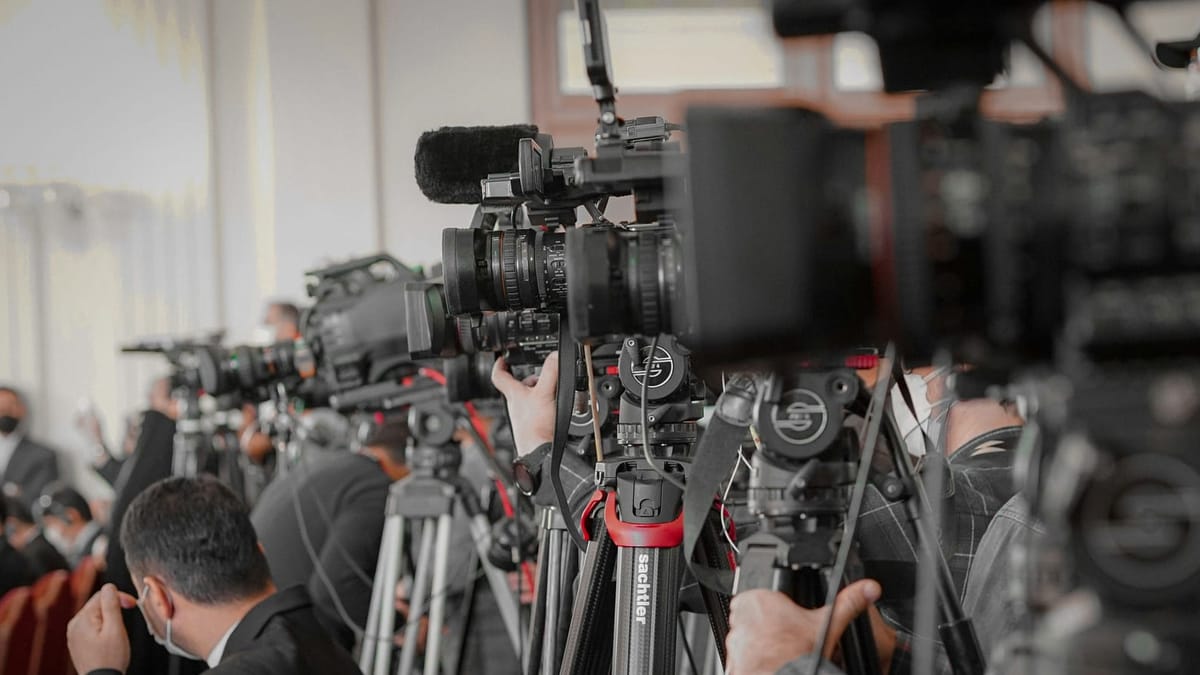
What was Carney thinking? There's no other word for it: This was stupid. But there was no immediate way to interrogate his approach, because Carney didn’t take questions afterwards. The planned news conference was abruptly cancelled "moments before Carney was expected to appear." Carney had been travelling the world, with destinations in China, Qatar and Davos, Switzerland. There was much to cover about his trips and developments in Canada in the interim. But the most interaction with news media Carney had was when a group of reporters asked questions about his relationship with Trump. He called them boring. News media was left in the dust.
This isn’t a one-off approach; Canadian politicians are increasingly shunning news media. That spells even more trouble for our fractured information ecosystem.
Federal Conservative leader Pierre Poilievre leaves no room for interpretation. He despises the news media. Whether it’s coming down hard on CTV News for a mistake in editing or staffers getting physical with journalists during the last election campaign; Poilievre has consistently attacked legacy media. He prefers friendly alternative media, like podcasts. Jordan Peterson is a bigger priority for his time than CTV News, Global News or the Toronto Star.
Today marks the first day of the federal Conservative leadership convention. Party leader Pierre Poilievre is expected to retain his position after the leadership review, as most Conservative Party members approve of him. The rest of Canada is less likely to be impressed, of course. But that is immaterial in an internal party decision.
Regardless of his personal standing, the party has made it clear they will not hand news media anymore than they feel they should. Arno Kopecky, writing for the National Observer, noted that pro-Poilievre influencers had been given media accreditation under the new label "content creator," while he had still not been approved. This has not been the first time the Conservatives barred journalists access to their convention. Reporters working for the National Observer, The Breach and The Maple were all denied entry to the 2023 Conservative convention.
 Scott Martin
Going even further, however, was Ontario premier, and leader of the province's Progressive Conservative party, Doug Ford. This weekend also begins the ruling party's convention in Toronto. Spokesperson Peter Turkington told CBC News "The Ontario PC Party Convention is a closed event and will not be open to media attendance." Ford himself deployed his folksy underhanded tactics to defend the decision in a press conference. "I'm out in the media almost every second day," he whinged. As though the party that rules Ontario unilaterally is one man, who is entirely open about everything and nothing would be gained by having the public know what goes on internally at convention.
Three of the most prominent politicians in Canada have shirked the news media using a range of tactics. After returning from a global trip for the good of Canada, Carney dodged questions with no explanation. Poilievre and the Conservative party are doubling down on showing favour to sympathetic personalities; All while boxing out more accessible news media. Ford has decided that he can turn off the public's access to his party's convention in an unprecedented move.
Meanwhile, news broke this morning that journalists Don Lemon and Georgia Fort were arrested by federal agents for covering a protest at a church in Minneapolis. Across the board, our governments have shown that they are happy to ice out journalists for personal benefit. In the US, we see where this tactic can lead.
Politicians in Canada now feel emboldened to tighten their relationship to news outlets that provide critical coverage, no matter how small. News media needs to learn how to work around these new restrictions and to advocate for freedom of the press. What hope there is for this approach is dubious at best.
There have been countless criticisms of the news media made in this newsletter. They will continue to be made. But politicians in Canada have made it clear that the news media is in a subordinate position to them. Information for the public is to be restricted on their terms. This will not only embolden more politicians to do the same, it will also further dilute reliable information that Canadians can obtain from these institutions.