
Manufacturing Consent for Liberal "Tough on Crime" Bill
Little scrutiny of the legislation paves way for acceptance of "tough on crime" approach

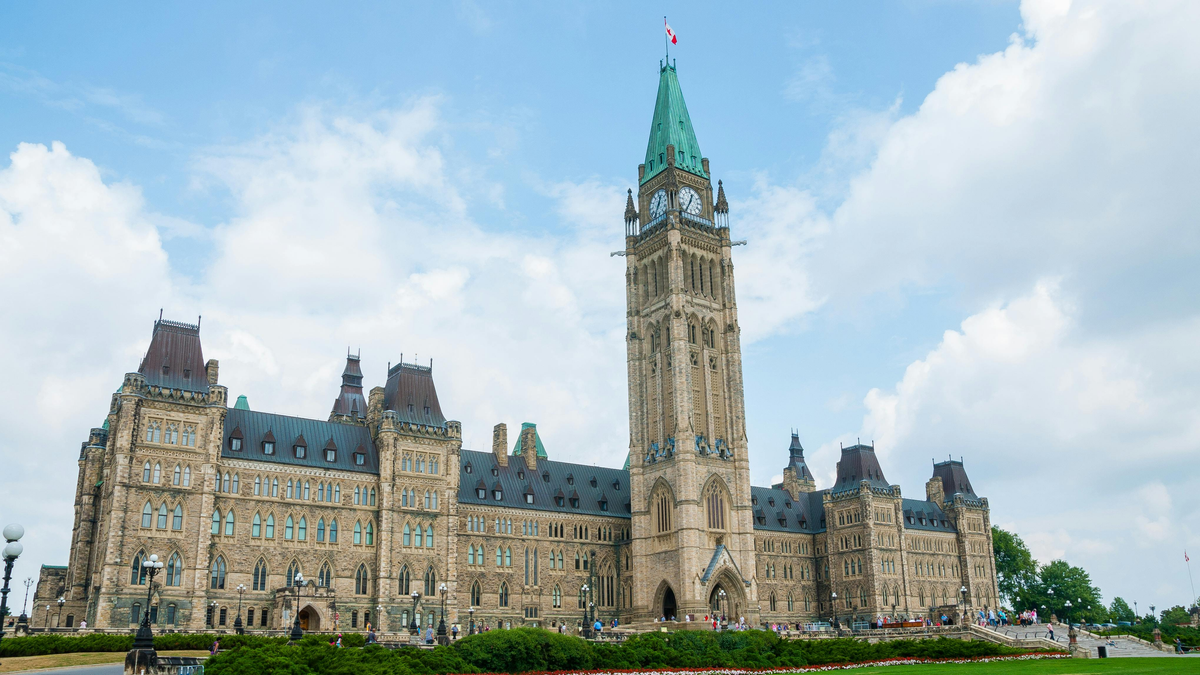
With a name like the "Protecting Victims Act," the Liberal's new crime bill already has a head start in garnering positive coverage. Here are some of the measures introduced in the legislation:
- Murder motivated by hate, including femicide, would become first-degree.
- Criminalization of coercive control, regarding intimate partner violence.
- Reintroduce and strengthen mandatory minimum penalties in regards to those found guilty of child sexual offences
While the bill has more, including targeting those who distribute sexual deepfakes, the main thrust of this is to increase punishments to further a "tough on crime" outlook. It does this while rhetorically centring victims, especially children. In a press release for the new bill, the government said the act was to "protect victims and survivors of sexual violence gender-based violence, and intimate partner violence, and to keep our kids safe from predators."
Central to the tabling of this new bill, and its "tough on crime" approach, is the reintroduction of mandatory minimum sentences. In an Oct. 31 decision from the Supreme Court of Canada, mandatory minimum sentences for CSAM were deemed unconstitutional. The Supreme Court explained that a mandatory minimum sentence isn't necessarily a violation of the charter, but if its application is too broad, the sentence "is constitutionally vulnerable because it leaves no choice but to impose a grossly disproportionate sentence on certain offenders." In an article for the Canadian Bar Association (CBA) National Magazine, chief general counsel at the Raoul Wallenberg Centre for Human Rights said of the federal government's path after the decision, "they will have to narrow the parameters of what access and possession means so that you're not capturing at this low-end of the spectrum."
References to this narrowing of parameters only warrants a passing mention in the official government announcement. To align the new mandatory minimums with the constitution, the bill claims to "do so by allowing judicial discretion to order another sentence of imprisonment." How this judicial discretion will be implemented remains unclear.
News outlets, meanwhile, took this unveiling of the crime bill at face value with little, if any, interrogation of what this will mean in terms of criminal justice. The CBC News article pulls its headline directly from the announcement that it will "protect children, victims of gender-based violence." Rather than the actual measures the bill will introduce, it de facto accepts the outcome. For instance, in describing certain changes to prevent exploitation of children abroad, the article reads they "would make it easier to prosecute predators." How? It isn't said.
In fact, the only person quoted about this legislation in the article is Justice Minister Sean Fraser. Other information is pulled from previous Supreme Court rulings, "government officials" and reports. No expert in femicide, prosecuting CSAM, or criminal reform is even consulted.
Other reporting does better in their headlines by focusing on what the bill actually does, rather than what it purports to do. The CTV News article refers to the bill's subject matter of femicide and deepfakes. While the article suffers from similar problems as the CBC News piece in terms of sourcing (other than "officials," Fraser is once again the only voice quoted), it presents a more critical look overall. Questioning the bill's ability to eliminate gender based violence, the article clarifies that officials "did not detail exactly how this plan will do that."
Global News' headline also focuses on the content of the bill, but is a much leaner article overall. Only one line is dedicated to the mandatory minimum, before quoting Fraser's comments that they will comply with the Supreme Court ruling.
 Scott Martin
Unsurprisingly, one of the few critical pieces to be published since the unveiling of the new bill has come from the National Post. Denying that the Liberal bill would protect victims, its main thrust is that the language meant to craft mandatory minimum sentences in line with the Supreme Court ruling is too lenient. "Fraser’s amendment proposes to pull that bar down and makes striking down a minimum sentence part of the normal working of the machine that is the Criminal Code," author Jamie Sarkonak writes. While this does raise questions as to the utility to fulfill the intended goal of the legislation, it takes for granted that constitutionally compliant mandatory minimum sentences would protect victims, when this is not necessarily true. The piece ends with the ominous warning "Do not mistake it for being tough on crime."
Overall, the coverage of this bill excludes mentions of its effectiveness by not reaching out to experts and activists who focus on this realm. For example, internationally recognized women's rights advocate Julie S. Lalonde posted on Bluesky her initial thoughts that, while there were some positive changes to the bill, the criminalization of coercive control leaves "way too much room for it to backfire." In an article released in December of 2024 by the National Magazine on coercive control, its pointed out that the CBA's criminal justice section believes "a new offence is unnecessary."
This is not to mention that stable housing and strong social services would go a long way in preventing intimate partner violence. For example, Joanne Ferland, an activist in North Bay, runs a program meant to give victims financial tools to escape their violent home situations. Why was Ferland not reached for comment? While a crime bill is not where these social fixes would be proposed, the discussion around such a topic requires a comprehensive look at practical solutions and prevention, rather than just bare context for the latest legislation.
While this article has only scratched the surface in terms of critical views of the Liberal crime bill, it shows what a blind spot remains in Canadian news. There is no doubt that some measures in this bill are positive moves, including the criminalization of non-consensual and sexual deepfakes and of threatening to distribute CSAM online. But the job of the press is not to sole-source quotes on this bill from the government itself. Undoubtedly there are pressures facing these reporters and their news room to push out the story as quick as possible, but the complete lack of critical voices present shows how low a priority it is.
Tough on crime policies are a tactic that has warranted scrutiny, even in the black-and-white issues of intimate partner violence and sex crimes involving children. By failing to apply that critical lens, news organizations lead the population to believe that, while there may be missteps in implementation, it leads to a de facto good outcome. Criminalizing certain acts may have positive impacts, but that result should not be taken as a given. Unfortunately, that assumption has largely been accepted by news media. As a result, "tough on crime" policies are laundered to the public.