Israel Never Stopped Killing Journalists
Two and a half years of murdering and torturing journalists with no end in sight

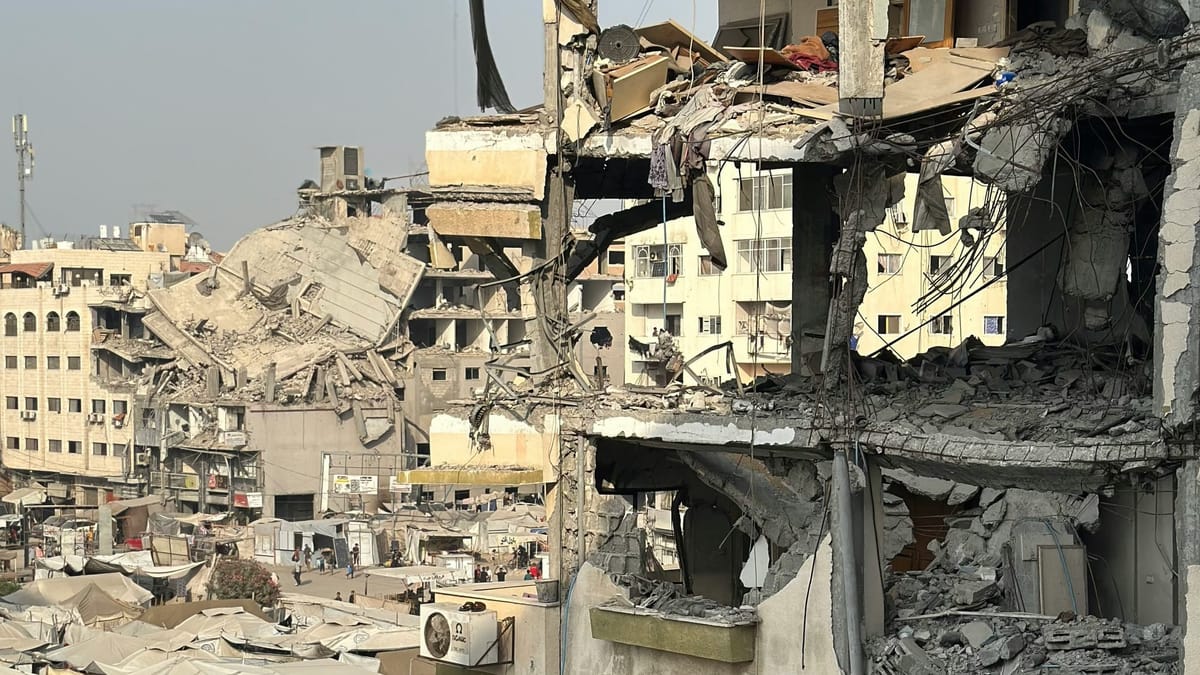
Shortly after Iran and the US announced a two-week ceasefire in their war, which itself came after US President Trump announced he would annihilate Iran's entire civilization, Israel was supposedly meant to stop attacking Lebanon. Instead, Israel bombed over 100 targets in Lebanon within a span of 10 minutes. In an operation literally named "Eternal Darkness," the Israeli military launched 1,000lb bombs into residential Beirut neighbourhoods, killing 254 people and wounding 1,165.
Israel's campaign in southern Lebanon has been brutal and unrestrained. As has been the case in Palestine, the country has not respected ceasefires. The latest bombings in Lebanon constitute a "grave violation" of ceasefire according to Iran's deputy foreign minister. The Strait of Hormuz, a key choke point in the world's oil supply that has been pivotal in the course of the war, has been closed once again over Israel's rogue aggression.
It's no doubt that attacking Iran has been a neverending disaster for the Trump administration. In an operation that was most likely intended to be an in-and-out maneuvre like the illegal kidnapping of Venezuelan President Nicolas Maduro, Trump and Netanyahu have entered into a game with wildly different objectives. Trump hopes to assert US world hegemony, while Netanyahu hopes to wield the extremist Greater Israel project to keep himself out of prison. Both are happy to eliminate huge swaths of men, women and children to achieve their goals.
This is not new. From the country that brought you the Iraq and Afghanistan wars to the country that has inflicted unimaginable, genocidal violence against Palestinians since 2023, these tactics are predictable. This predictability has been due to the efforts of countless brave journalists on the ground, who continuously put their lives on the line so that information can get to the public. Israel knows this and has been targeting and killing journalists with regularity.
 Scott Martin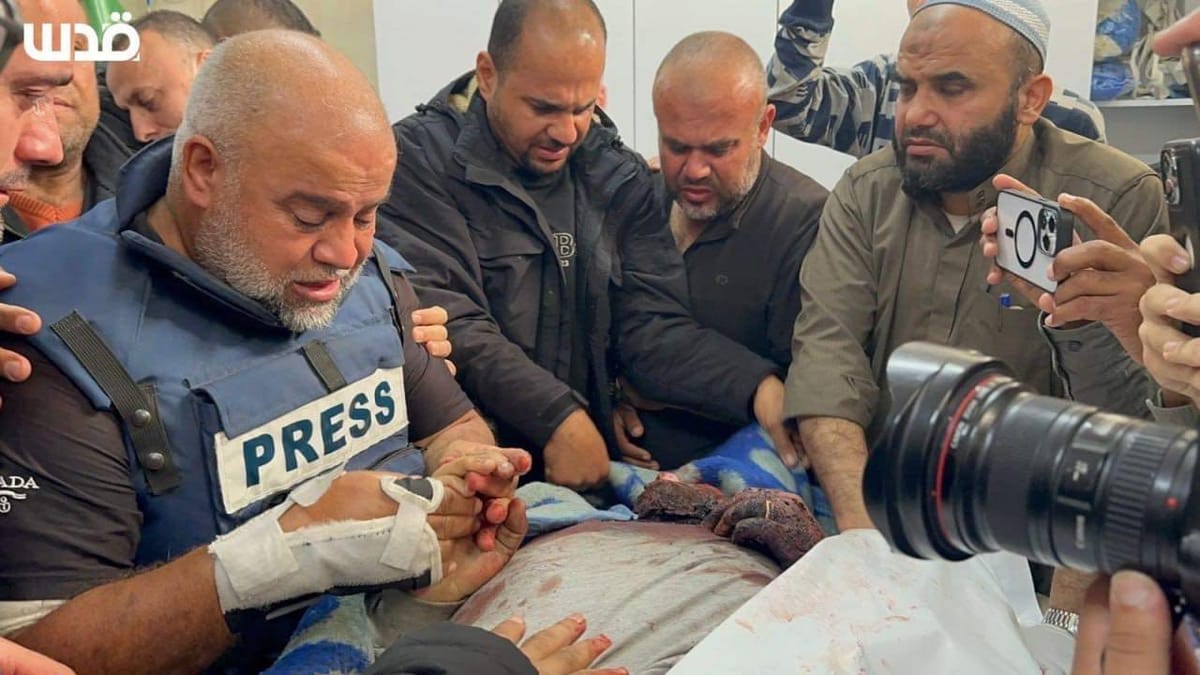
Israel's contempt for journalism has been clear for years. But despite less media coverage, their targeted killings have not stopped. On March 28, an Israeli airstrike killed Ali Shoeib, a journalist for al-Manar TV, alongside Fatima Ftouni and her brother Mohammed Ftouni, who were reporters for Al-Mayadeen TV. Then, on April 8, Israel killed two journalists. Ghada Dayekh, a reporter who had been at the Sawt Al-Farah radio station for 37 years, was bombed in her apartment building by an airstrike. On the same day an Israeli double-tap strike killed Mohammed Samir Wishah, a journalist with Al Jazeera's Mubasher channel.
Wishah had been the subject of a propaganda campaign by Israeli factions. Israel's military attempted to smear him as a terrorist by using photos from a documentary film to claim he was a member of Hamas. This was borne out in the aftermath of his killing, where the Arabic-language spokesperson for the Israeli military said Wishah wasn't a journalist, merely "a Hamas terrorist in every sense of the word." As Middle East Eye notes, Wishah is the seventh Palestinian journalist killed by Israel since the "ceasefire."
Yet their repeated killing of journalists has barely broken through news organizations in Canada. One article from The Associated Press appears in CTV News about a military unit that assaulted a CNN crew receiving punishment (a suspension). An article about the three journalists killed by an Israeli airstrike received a short article in the Toronto Star. So far, there has been no mention of Wishah or Dayekh's killing in Canadian legacy media.
According to the Committee to Protect Journalists (CPJ), this violence is unique in history:
"[A]t least 259 journalists and media workers are among the more than tens of thousands killed across Gaza, Yemen, Lebanon, Israel, and Iran since the Israel-Gaza war began. Israel’s disregard for the lives of journalists — and for the international laws designed to protect them — is unparalleled. Israel has now killed more journalists than any other government since CPJ began collecting data in 1992, making this war the deadliest on record for journalists."
Target killings are only part of the puzzle. Earlier this year, the CPJ released a report documenting testimony from 59 Palestinian journalists detained in Israeli facilities. Each revealed horrific torture from ear-splitting music for days on end to disturbing accounts of sexual abuse. Out of these journalists, 48 were never even charged with a crime (To be clear, even if prisoners were charged and found guilty, torture would not be acceptable). Israel's attacks on journalism are intentional and, more critically, a crucial part of their genocidal campaign.
Israel's expansion into Lebanon and blatant violation of the Iran ceasefire agreements are an extension of their colonial campaign against Palestine. Journalists like Washah, Dayekh, the Ftouni siblings and those abused by the Israeli state are crucial to our understanding of this genocide and their behaviour in this new war. That's why they're being targeted. That's why journalists were targeted in their genocide against Palestinians.
All of this is known thanks to the immeasurable bravery of those who risk death at any moment. The neglect of their suffering is one of the continuing crimes of Canadian news institutions.