AI, Journalism and Neocolonialism
Investigation into AI freelancing shows how foundational Third World exploitation remains

Recently, Nick Hune-Brown, executive editor at The Local magazine in Toronto, published an investigation into a freelance writer he suspected had used generative AI to develop pitches. "Investigating a Possible Scammer in Journalism’s AI Era," is an excellent, empathetic piece of journalism that delves into many of the issues with the industry that this publication has delved into. I encourage readers to check it out in full.
In summary, by exploring a pitch by someone named "Victoria Goldiee," Hune-Brown discovered that many of the people she claimed to have interviewed said explicitly that they did not know anyone by that name or that they can't remember that they were interviewed. Multiple teams of editors in different publications, made into a skeleton crew by the current state of the industry, missed these errors and published work by her. This included high-profile outlets like The Guardian.
At the end of his investigation, Hune-Brown writes that he believes the author writing under this name "is either from or still lives in Nigeria." This idea was developed further in an interview between Hune-Brown and The Walrus’ editor-in-chief Carmine Starnino about the investigation. If living in Nigeria is the case, Hune-Brown said, "a terrible word rate at a publication in the United States could actually be a pretty decent payday—especially if you just have to enter it into ChatGPT."
Starnino replied "That almost makes it less a story about deception and more one about economic conditions."
Economic conditions have been an often unspoken undercurrent to a lot of the degradation that social media platforms, and by extension society, have faced in the wake of generative AI. But people in the Third World using it to earn money is not new. Jason Koebler at 404 Media investigated the sources of AI slop on Facebook in 2024. Koebler found that creators in countries like India, Vietnam and the Philippines are using this slop to game Facebook's algorithm, raking in sizable cash from the practice.
More recent articles from Koebler point to an endemic problem in how algorithms necessarily function. In the recent example of X publishing the location data of huge accounts, Koebler explains that this is a natural conclusion of the culture wars. "This has created a system where it makes financial sense for people from the entire world to specifically target Americans with highly engaging, divisive content," Koebler writes. "It pays more."
In a more direct example of AI exploitation of Third World people, Joseph Cox at 404 Media reported that Flock, "an automatic license plate reader and AI-powered camera company" has outsourced training to overseas workers based in the Philippines.
From all of these examples, it's clear that AI, especially the generative kind like ChatGPT and Sora, has been used by people in Third World countries to make money. When viewed through a lens of neocolonialism, this large portion of the internet's degradation can be concretely explained.
 Scott Martin
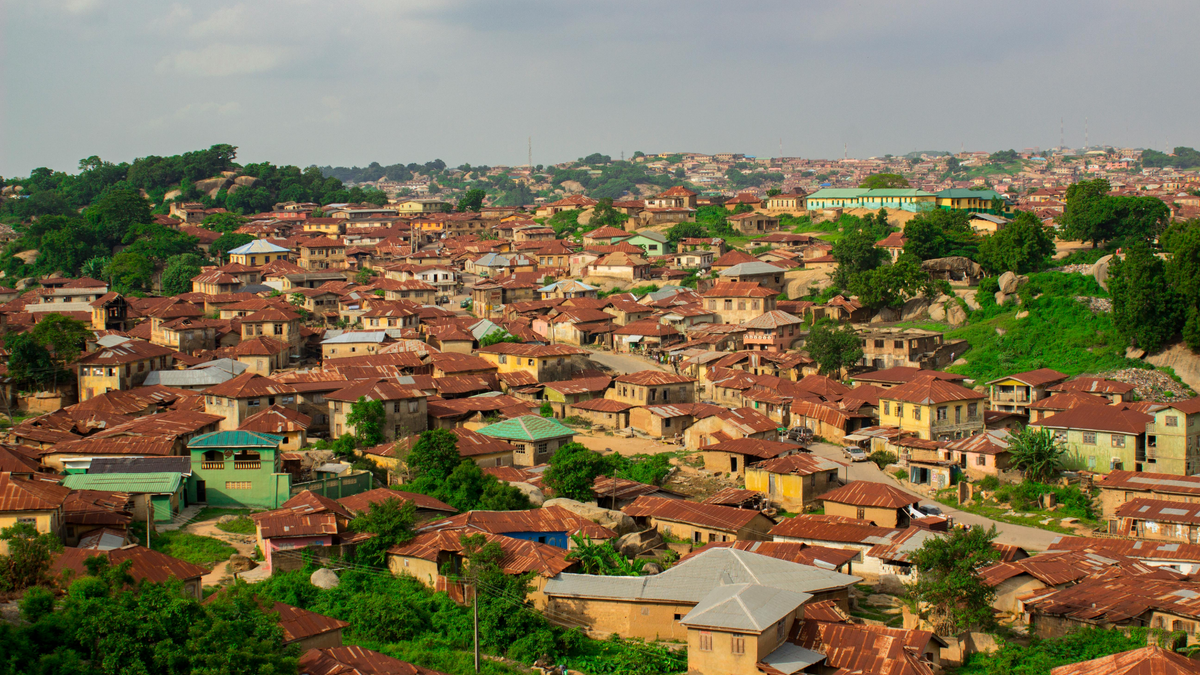
In Lagos, the largest city in Nigeria, 78 per cent of workers earn under $62.50 USD a month. Minimum wage reached 30,000 Naira in 2019, an income approximately equivalent to $20.71 USD. As Hune-Brown notes in his investigation, "Outrider says they pay $1,000 per article. Dwell’s rates start at 50 cents a word—a fee that’s difficult to justify if you actually want to interview 10 of the top designers in the world, but a healthy payday if you only need to enter a few words into ChatGPT." This payday goes even further when average wages in your country are so low.
But it's not just the output that's to be considered when discussing Third World citizens using generative AI. These are resource-intensive tools that hasten the degradation of the environment. African countries are particularly vulnerable to the devastating social and ecological effects of critical minerals mining. As minerals like lithium and cobalt are extracted from the earth, other minerals more specific to chips for GPU processing, like germanium and gallium, will be mined from bauxite reserves. As Foreign Policy notes "AI-specific needs are projected to increase germanium demand by 37 percent and gallium demand by 85 percent by 2033." Altona, a rare earths extraction company, recently found reserves of gallium in Monte Muambe, an inactive volcano in Mozambique. The Democratic Republic of Congo is seeking to unseat China's global dominance on germanium with its own production of the mineral. Environmental devastation and exploitation is ingrained into the production and perpetuation of generative AI.
Make no mistake, large tech companies are aware of this opportunity to extract more wealth from Third World nations. Cassava Technologies announced in October that NVIDIA had made a major investment in their company to address "Africa's compute gap." Part of this push includes building "AI factories" to produce GPUs in countries like Kenya, Egypt, South Africa, Morocco and... Nigeria.
To draw this all back to The Local article, it then becomes a piece of a larger puzzle. It is perfectly rational and understandable why someone in a Third World country with limited options to make money would turn to generative AI. Platforms encourage usage with their policies. Withered journalistic outlets have less safeguards to evaluate new writers who use ChatGPT or Claude. Paltry payments for freelance articles, brought on by the slow starvation of news, dissuades writers in global north countries from honestly attempting to pitch. But in countries where income has been throttled by decades of neocolonialism, imperialism, instability and resource extraction, these monetary rewards are worth far more. If generative-AI streamlines this process to allow for more income, its use is a natural progression. This is not to blame each individual "Victoria Goldiee," but to point out that this is a systemic issue. Of course, with the environmental impacts of generative AI use, people in Third World countries are far more likely to suffer the effects of climate change.
In short, wealthy white capitalists in the global north created technology to boost valuation of their companies. Usage of these tools, in turn, was incentivized by big tech platforms offering monetary rewards– payments that would go furthest in Third World countries. People in those countries then use these tools to push disinformation and further boost usage statistics for these companies. These statistics, gathered by the companies, are then used to justify further resource extraction, damaging the climate and these Third World countries in particular.
It's clear that the disinformation crisis of generative AI, and the impact it's having on news outlets around the world, is fundamentally tied into both the economic and social exploitation of the Third World. It's important that this dynamic was brought up in The Local reporting, as tackling the issue without this material analysis fails to paint the full picture of the continuing exploitation that plagues the world.